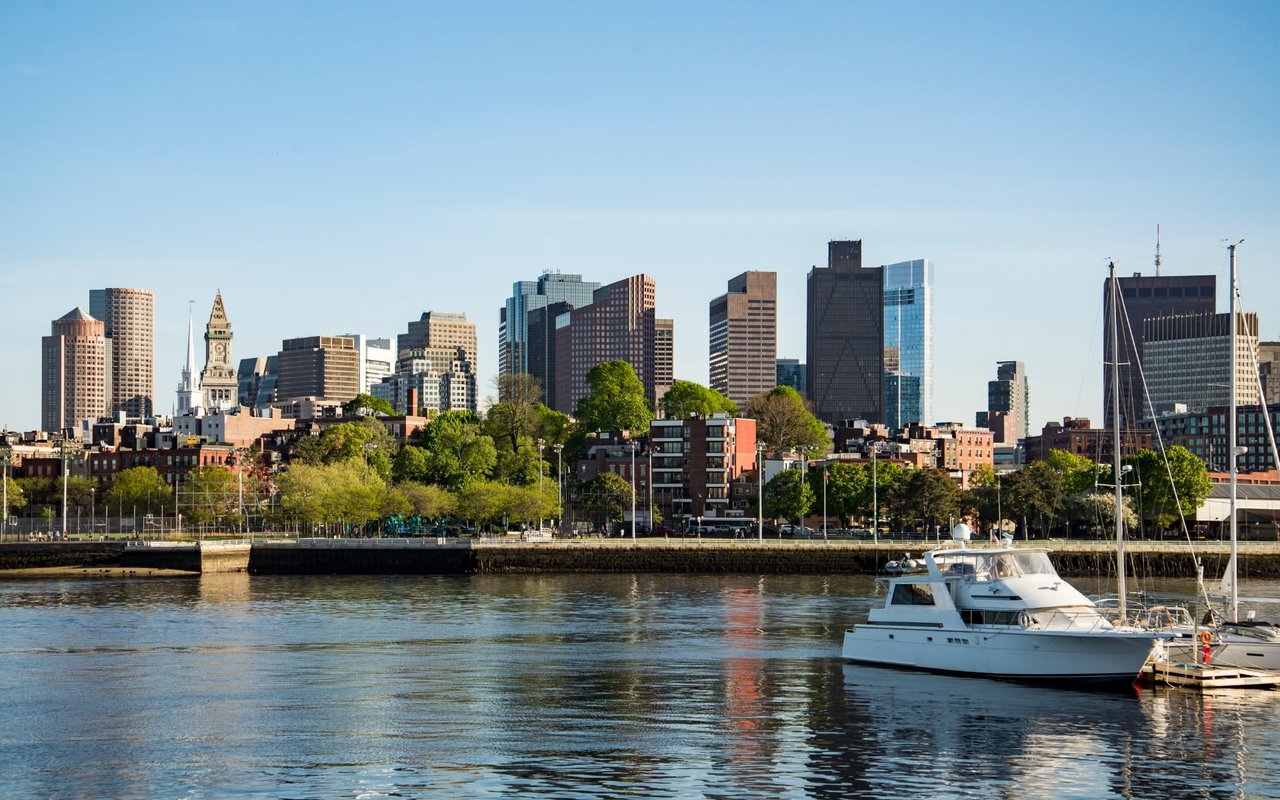
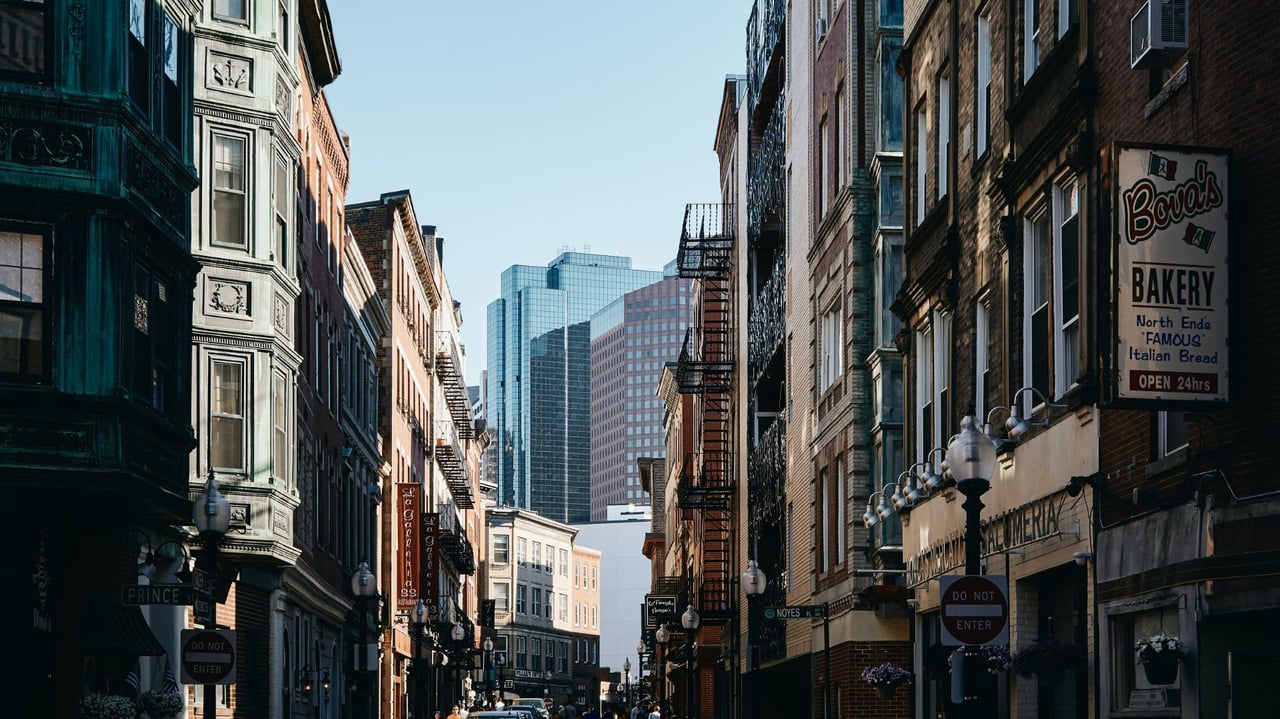
Boston’s spring market is not exactly soft, and it is certainly not sleepy. What it is, at least right now, is more discerning. Across the city’s most polished urban enclaves—Seaport, Back Bay, Beacon Hill, and the downtown edge of South Boston—buyers are still active, renters are still paying up for location and convenience, and developers are still chasing the same thing they have been chasing for years: scarcity with a point of view. Recent local reporting has described the broader Massachusetts housing market as settling into a more pragmatic “new normal,” where activity has returned, but with sharper expectations around value, product, and positioning.
That feels especially true in Boston’s luxury condo market. The era when nearly every well-located condo could ride the tide is over. Now, the homes that stand out are the ones that offer the full package—architecture, views, service, design, and a neighborhood that feels alive the moment you step outside. In other words, Boston’s downtown-facing market is behaving the way mature luxury markets tend to behave: more selective, more strategic, and still very much defined by the best addresses.
Seaport: Still Boston’s glossy front row
No neighborhood better captures Boston’s evolving luxury identity than the Seaport. It remains the city’s most overtly modern district—glass, waterfront, hospitality, and a kind of curated convenience that continues to appeal to buyers who want service and spectacle in equal measure.
Development remains central to that story. The Seaport Square PDA continues to frame the district’s long-term buildout as a dense mixed-use neighborhood of new blocks, open space, and layered uses. More specifically, Seaport Square Blocks B and C at 23–55 Northern Avenue are set to deliver 832 rental units, including 96 income-restricted apartments, while the Reserved Channel project proposes about 1.739 million square feet across eight new buildings with residential, hotel, retail, research, civic, grocery, wellness, and dining uses.
That pipeline is substantial, but the core Seaport dynamic has not changed: truly prime inventory still feels limited. Waterfront product, upper-floor homes with real views, and residences in full-service buildings remain difficult to replicate. In a city where scarcity still drives value, that matters.
The lifestyle layer is only getting stronger. Boston Magazine recently highlighted notable 2026 restaurant openings around the city, while Boston.com’s March openings coverage underscored the continued energy around Boston dining this spring. In Seaport specifically, this kind of hospitality momentum reinforces what buyers are really paying for here: not just square footage, but a polished neighborhood experience.
Back Bay: Quiet confidence at the top of the market
If the Seaport is Boston’s glossy modern face, Back Bay remains its most dependable expression of urban luxury. It is still the neighborhood buyers gravitate toward when they want pedigree, permanence, and a level of walkability that feels genuinely difficult to replicate.
Back Bay is not driven by novelty. It is driven by enduring desirability: historic architecture, proximity to Newbury Street, and a residential environment that continues to hold its place at the top of the market even as buyers become more selective. In today’s market, that tends to favor the homes that feel especially complete—beautiful renovations, full-service living, and rare extras like parking, outdoor space, and strong views. Boston’s broader luxury market coverage continues to show that selective demand is a defining feature of the current cycle.
There is also a quieter story of reinvention underway. Boston Planning’s development pipeline shows that even in one of the city’s most established districts, developers are still pursuing opportunities to reposition and refine key sites. Back Bay may not be defined by cranes in the way Seaport is, but it is still very much in motion.
On the lifestyle side, Back Bay remains one of the city’s most reliable intersections of luxury retail, dining, and residential prestige. The neighborhood continues to benefit from the kind of street-level vitality that supports real estate values over time, even when the pace of transactions slows.
Beacon Hill: The luxury of not changing much
Beacon Hill remains Boston’s most elegantly stubborn neighborhood. Its value has always come from scarcity, scale, and atmosphere rather than novelty, and in the current market that has become even more meaningful.
When buyers become more selective, neighborhoods with inherent limits tend to look stronger, not weaker. Beacon Hill’s historic housing stock, low turnover, and highly specific charm still make it one of the city’s most insulated real estate plays. It is not a neighborhood that depends on a constant flow of new inventory or major reinvention. Its luxury appeal is quieter than that. The best homes here do not need much explanation: they are rare, beautiful, and difficult to replicate.
In that sense, Beacon Hill continues to benefit from exactly what it has always had—character, scarcity, and a deep sense of place. In a market where buyers are weighing quality more carefully, those qualities still carry real value.
South Boston: Less scrappy, more strategic
South Boston has spent years evolving from neighborhood favorite to full-fledged urban market, and by now that transition feels complete. What makes it compelling is not that it is trying to become Back Bay or Seaport, but that it offers its own version of city living—more residential, still energetic, and increasingly polished around the edges.
The development rhythm here is steady and incremental. Boston Planning’s active project pipeline continues to show new residential and mixed-use proposals in and around South Boston, reinforcing the neighborhood’s next phase of growth. It may not have the headline-making scale of Seaport, but it does have a steady stream of infill development that tends to support long-term value because it adds density without completely overwhelming neighborhood character.
South Boston also benefits from Boston’s broader rental strength. Even though neighborhood-specific rental conditions can vary block by block, the citywide rent picture remains elevated, helping sustain demand in highly livable, well-connected neighborhoods close to downtown. That dynamic continues to support both investors and buyers who see long-term upside in well-located South Boston property.
And then there is the lifestyle component. South Boston’s dining and social scene continues to deepen, giving the neighborhood a more complete urban identity than it had a decade ago. Buyers today are not only comparing homes. They are comparing lifestyles.
The downtown mood: refined, active, and still supply constrained
The most interesting thing about Boston right now is that the city’s core neighborhoods are not standing still, even if the market feels less feverish than it once did. Seaport is still building out its identity in real time. Back Bay continues to prove that legacy luxury can still feel current. Beacon Hill is doing what it always does: staying scarce and quietly valuable. South Boston is maturing into a more complete urban market with both residential energy and investment appeal.
Across all four, the same theme keeps surfacing. Boston’s downtown-oriented real estate market is no longer rewarding everything equally. It is rewarding clarity—clear value, clear design, clear lifestyle, clear neighborhood advantage. That may actually be healthy. In a city where supply remains constrained and the best locations still carry real weight, a more selective market does not read as weakness. It reads as sophistication.