Boston Luxury Real Estate Heading Into Fall 2026: Buyers Are Active, But They're Choosing Carefully
As we enter September, the Boston luxury market isn't giving us a simple "buyers' market" or "sellers' market" story.
The better description is:
A market that rewards scarcity and punishes sameness.
Across Boston, buyers continue to transact at significant price points. But the difference between a property that attracts immediate attention and one that sits is increasingly tied to the individual residence.
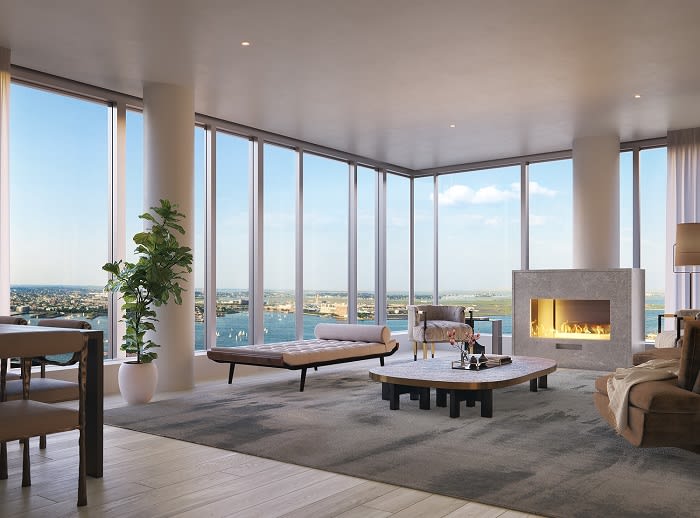
View.
Outdoor space.
Parking.
Floor plan.
Condition.
Building.
And, critically, price.
That's particularly visible in Seaport District, where buyers currently have considerably more leverage than they do in many traditional Boston neighborhoods.
As of June 2, Seaport had 12.9 months of condominium supply, with 29 year-to-date closings averaging approximately $2.59 million. Those properties sold at an average 95.5% of asking price and took roughly 74 days to secure an offer.
South Boston tells a very different story.
Recent six-month MLS data through August 12 showed 204 condominium sales, the highest transaction count among the major Boston neighborhoods analyzed, with a median sale price of approximately $872,500 and median market time of only 28 days.
Those numbers reinforce something I've been seeing in the market:
You cannot talk about "Boston real estate" as though it's one market.
Seaport Remains Boston's Premium Condo Market
The same six-month Boston condominium analysis placed Seaport's median sale price at approximately $1.528 million and average price per square foot at roughly $1,589—the highest $/SF of the neighborhoods in that dataset. Median market time was approximately 59 days.
That's a useful combination of statistics.
Seaport remains expensive.
Buyers still value it.
But they don't necessarily need to rush.
That creates an interesting environment for buyers who know what they're looking for.
EchelonSeaport: A Recent Sale Shows Where Value Is Holding
EchelonSeaport remains one of the buildings I watch most closely because its size gives us meaningful transaction data.
A recent example is Residence 716 at 133 Seaport Boulevard.
The one-bedroom-plus-den residence closed on August 25 for $1.395 million, approximately $1,669 per square foot. It had originally sold in December 2019 for $1.375 million.
That transaction is interesting for several reasons.
The residence offered a balcony, parking and Echelon's extensive amenity package. But the resale price was only modestly above its 2019 purchase price.
That doesn't mean Echelon hasn't performed.
It demonstrates why buyers and sellers need to look at individual residences and basis, rather than relying on headlines about neighborhood appreciation.
Current building-level data provides additional context: as of August 29, Echelon's trailing 12-month average was approximately $1,693 per square foot across recorded transactions.
St. Regis Is Giving Us an Important Luxury-Market Signal
The recent activity at St. Regis Residences Boston may be even more important.
Recent August sales reported at the building include:
Residence 14C — $2.6 million
Residence 11G — $2.8 million
Residence 11C — $2.2 million
Earlier this year, the building's remaining developer inventory was repositioned and repriced after new capital entered the project. The Boston Globe reported in March that 22 residences were repriced as part of the relaunch.
Now we're beginning to see the results.
For anyone who owns a luxury condominium elsewhere in Seaport, these sales matter.
Why?
Because a $2 million to $5 million buyer considering Echelon, Pier 4, 22 Liberty or 50 Liberty may also be looking at St. Regis.
Every significant St. Regis closing helps establish the competitive landscape for the rest of Seaport.
But St. Regis Also Shows Why Original Purchase Price Matters
There is another side to the building's story.
Residence 8A is currently listed at $1.549 million, after beginning the year at $1.749 million.
Public records show the residence originally sold in December 2022 for approximately $2.213 million.
That's a substantial difference.
And it illustrates an important lesson for luxury buyers:
The quality of the property matters—but so does the price you pay for it.
Even exceptional buildings can produce very different investment outcomes depending on purchase basis, timing, floor plan and exposure.
This is why I believe luxury buyers should think about resale before they buy, not five years later.
Boston's Building Hierarchy Is Becoming Easier to See
Current building-level data gives us another useful way to look at the market.
Trailing 12-month average price-per-square-foot figures as of August 29 included approximately:
- Four Seasons Private Residences One Dalton Street — $2,760/SF
- Raffles Boston — $2,710/SF
- Ritz-Carlton Residences at South Station Tower — $2,079/SF
- EchelonSeaport — $1,693/SF
- Millennium Tower Boston — $1,411/SF
These aren't apples-to-apples comparisons. Building age, residence mix and the number of recent transactions all matter.
But the data is useful because it illustrates how aggressively Boston buyers differentiate among luxury products.
"Luxury condo" isn't a valuation category.
The building matters.
South Boston Is the Volume Story
Now compare Seaport with South Boston.
South Boston recorded 204 condominium sales during the six-month period ending August 12—the highest volume in the Boston neighborhood dataset—with a median price of approximately $872,500 and 28 median days on market.
A separate August market analysis showed a roughly $990,000 median sale price, $882 median price per square foot and approximately 35 days on market.
Different methodologies produce different headline numbers, but the directional message is consistent:
South Boston remains highly liquid.
There is inventory.
But buyers are absorbing it.
The $1M–$2M Buyer Has More Choices Than Ever
This is where the Seaport/South Boston relationship becomes particularly interesting.
A buyer with $1.5 million to $2 million can realistically compare:
A South Boston penthouse with private outdoor space.
A larger South Boston duplex with parking.
A Fort Point loft.
An Echelon residence.
A smaller St. Regis residence.
Potentially a Downtown luxury condominium.
Those properties offer completely different lifestyles.
But they compete for the same buyer's money.
That's why I don't believe sellers should define their competition by ZIP code anymore.
A $1.7 million South Boston seller needs to know what $1.7 million buys in Fort Point and Seaport.
And a $1.7 million Seaport seller needs to understand what that buyer can get across the channel.
What I'm Watching Heading Into the Fall Market
Three things stand out.
First: buyers have leverage in Seaport.
12.9 months of supply is meaningful. Buyers should negotiate—but selectively.
Second: South Boston remains active.
Properties that combine parking, outdoor space, strong layouts and good locations can still create competition.
Third: Boston's luxury market is becoming increasingly residence-specific.
Building averages are useful.
But at the point of purchase or sale, the questions become much more granular:
Which floor?
Which exposure?
How permanent is the view?
How usable is the outdoor space?
How many parking spaces?
What are the carrying costs?
What else can this buyer purchase for the same money?
Those questions ultimately determine value.
What This Means for Seaport Sellers
This is not the market for generic luxury marketing.
If there are multiple residences available in your building, your listing needs to explain immediately why yours deserves the buyer's attention.
Don't lead with the pool.
Every buyer already knows the building has a pool.
Lead with what's scarce.
The terrace.
The view.
The corner exposure.
The two parking spaces.
The penthouse position.
The exceptional renovation.
That's where the value story begins.
What This Means for Buyers
Current conditions create opportunities—but I wouldn't automatically buy the property with the largest discount.
I'd rather buy the better real estate.
A residence with an exceptional view, great layout and scarce outdoor space at a fair price can be a much stronger long-term purchase than a compromised residence offered at a dramatic discount.
You can renovate finishes.
You cannot renovate the 17th-floor view into a 20th-floor view.
Joseph Barka's Perspective
My work across Seaport, Fort Point and South Boston gives me a useful vantage point on the current market.
I'm seeing buyers compare neighborhoods much more aggressively than they did several years ago.
That's healthy.
It forces us to answer the question that matters:
Why this property?
I've represented luxury residences and penthouses throughout the Seaport/Fort Point market, as well as sales across South Boston, and I believe the strongest advantage right now is knowing the competitive set at a very granular level.
Not simply what sold.
Why it sold.
Was it priced correctly from day one?
Did it have a terrace?
Was the view materially better?
Did two parking spaces matter?
Was there another residence in the building competing against it?
Those details don't always appear in an automated valuation.
But they're exactly what buyers and sellers need to understand heading into Boston's fall 2026 market.
Frequently Asked Questions
Is Boston Seaport a buyer's market in 2026? Recent data showed approximately 12.9 months of condominium supply as of June 2, with properties averaging 95.5% of asking price. That gives buyers meaningful negotiating leverage, although exceptional residences can behave differently.
What is the average price per square foot at EchelonSeaport? Building-level data as of August 29 showed a trailing 12-month average around $1,693 per square foot. Individual residences can trade materially above or below that figure.
Are St. Regis Boston condos selling? Yes. Multiple residences recorded August 2026 sales, including units reported at $2.2 million, $2.6 million and $2.8 million.
Is South Boston still competitive? Yes. Six-month MLS data through August 12 showed 204 condo transactions with a median 28 days on market.
Should I use price per square foot to value a Boston luxury condo? It's useful as one metric, but floor, view, outdoor space, parking, layout, condition, building and competing inventory need to be considered before reaching a valuation.
Work With Joseph Barka
For buyers and sellers navigating Boston’s luxury real estate market, experience at the neighborhood—and individual building—level matters. Joseph Barka, founder of The Barka Group at Compass, has more than 17 years of Boston real estate experience and over $200 million in career sales, with extensive transaction experience throughout Seaport, Fort Point, South Boston and Boston’s luxury condominium market. From EchelonSeaport and premier waterfront residences to distinctive Fort Point lofts and South Boston penthouses, Joseph provides clients with property-specific valuation, competitive-market analysis and a clear understanding of what drives value from one residence to the next. If you’re considering buying or selling in Boston Seaport, South Boston or the broader luxury market, contact Joseph Barka for a confidential conversation about your property, current opportunities and the market strategy that makes sense for you.